BL was asked to reminisce about the argument first proposed in 1989 on a possible « Parliament of Things ». Thirty years later, we have moved from a question which could be solved by an expansion of parliamentary politics — in the way Rousseau’s version of the social contract or Serres’ natural contract. But we have move to a much more tragic situation. The question is no longer to grand rights to non humans, but to accept to be dependent on them. The lecture uses the “Embassy of the North Sea” — sponsor of the prize — to give practical example of the shift in understanding political ecology.
Lectures
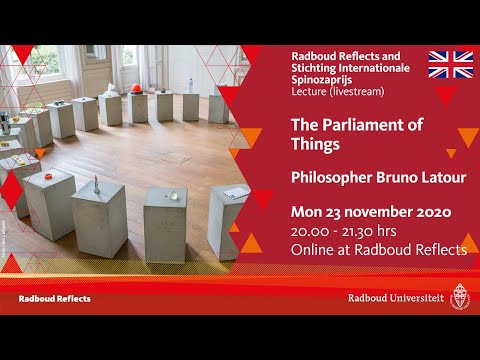
Lecture given on the 23rd of November at Radboud Reflects Nijmegen at the occasion of the Spinozalens prize 2020. Arjen Kleinherenbrink asks questions after the lecture.
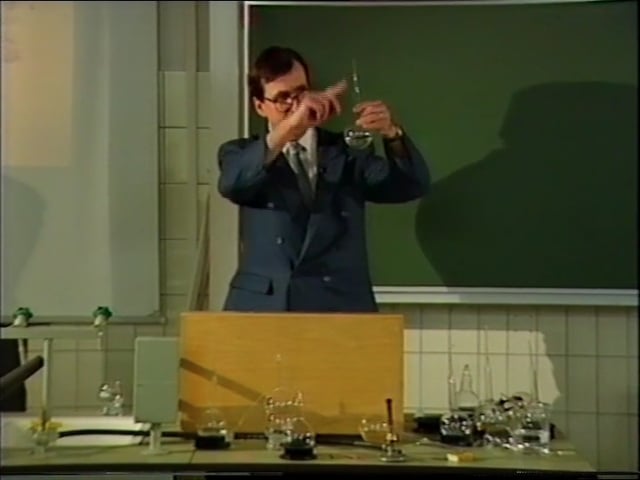
In 1999 Bruno Latour organized for Hans Ulrich Obrist a series of reenactment of public lectures famous in science. BL did the 1864 Pasteur's lecture (abridged) on spontaneous generation where Pasteur demonstrated in a beautiful series of experiments that Pouchet, his adversary, had actually contaminated his vessels by neglecting what will become the rules of aseptic culture.
Gentlemen!
A number of imposing problems now have our best minds in thrall. These include questions regarding the unity or plurality of the races of Man, whether his creation ought to be dated thousands of years or thousands of centuries past, whether species are fixed, or rather undergo a slow, progressive transformation into new species, how supposedly eternal matter relates to the nothingness outside of it, and whether the idea of God is useless. These are just a few of the issues now subject to learned debate.
You need, however, have no fear that my address tonight has any pretensions toward resolving any one of these earnest questions. But in the neighborhood of such mysteries lies another question, more or less closely related, to which I may, perhaps, venture to direct your attention; for its complexities, which I have made the object of concerted and conscientious study, are accessible to experiment.
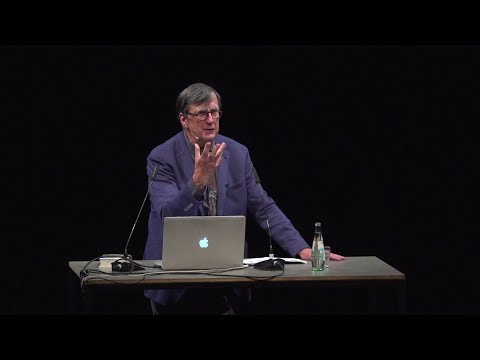
Given in the framework of the Anthropocene project followed by a discussion with John Shellnhuber
At the center of current political storms is the issue of climate change, suggests sociologist and epistemologist Bruno Latour. He reflects on current geopolitical conditions while underlining their intricate link to migrations, the explosion of injustice under the neoliberal regime and the panic-fueled return to nationalist egoisms. In his Anthropocene Lecture he reflects on how we might gain ground again in this vexing situation.
In his recent book Où atterrir? Comment s’orienter en politique (English edition Down to Earth: Politics in the New Climatic Regime forthcoming in 2018), Latour considers the ecological crisis of the Anthropocene as a fundamental crisis of modernity—a modernity built on abstract assumptions and detached from its material constraints. Much like closed, archaic societies, modernity turns out to be just as unable in responding to eminent change. The political anomalies of the present day make clear that current responses to this crisis give birth to unholy alliances against the real problem: finding another way to live on this Earth. While deregulation carelessly advances into a hypermodernism incapable of dealing with an increasing human population, a regressive flight into nationalist imaginations is equally problematic. As a counterpoint, Latour calls for a new cartography of this territory that is based on both communion and world-relatedness, advocating for a politics that thinks and acts neither globalist nor nationalist terms, but as Earth-bound. Following his lecture, Latour discusses his concept of a “terrestrial politics” with Hans Joachim Schellnhuber, director of the Potsdam Institute for Climate Impact Research (PIK).
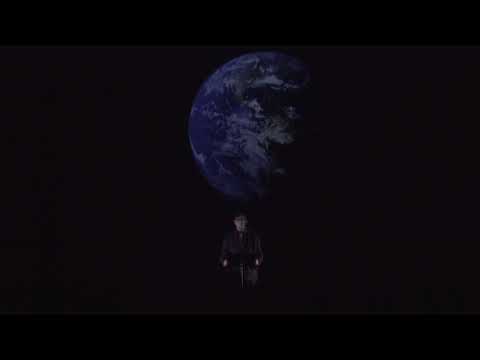
The performance lecture staged by Frédérique Ait-Touati sur des idées et dessins d'Alexandra Arènes, Sonial Lévy et Axelle Grégoire. This version was shot in Berlin at the HAU theatre the 20th of September 2017 Video and light design: Patrick Laffont-Delojo
Music: Eric Broitmann Light : Rémi Godfroy Production : zonecritique.org Co-production : Théâtre Nanterre-Amandiers, Künstlerhaus Mousonturm Frankfurt
Foregrounding the importance of soil and more generally the surface of the Earth —what is now often called the Critical Zone (CZ)— remains very difficult as long as the usual planetary view, familiar since the scientific revolution, is maintained. In this joint effort , we offer an alternative visualizations which allows to shift from a planetary vision of places located in the geographic grid, to a representation of events located in what we call a Gaiagraphic view. We claim that such a view because it gives pride of place to the CZ is much better suited to situate the new actors of the Anthropocene.
On Sensitivity Arts, Science and Politics in the New Climatic Regime (lecture proper starts at 16mn)
5th of July Keynote lecture in Melbourne for the opening of the Performance Studies International
What is the equipment necessary to render us sensitive to the New Climatic Regime? There is that of science, of course, without which we would not have become aware of the change. There is that of politics, the only way to assemble the relevant stake holders. But there is also that of the arts since we don't seem to be endowed naturally with the right sensitivity to absorb the magnitude of the ecological mutations. The lecture will review the overlap between those three forms of aesthetics (defined as what makes us sensitive to hitherto unknown phenomena) by using the various performances in which the author has been involved: theather, exhibitions, simulations as well as interventions in social science and philosophy.
Under the auspices of the Albertus Magnus professorship Bruno Latour gave a lecture in Koln on the 15th of June, "Climate Change: How to Make the Paris Climate Conference Work, An Alternative Procedure" presided by professor Andreas Speer
In May 2015, a simulation of the future COP21 that will be held in Paris in December 2015 was organized by a group of Sciences Po student under the direction of Frédérique Ait-Touati, Philippe Quesne and Bruno Latour at the initiative of Laurence Tubiana. 210 students from various universities attended the event that took place in a theatre, le Théâtre des Amandiers, entirely refocused by Quesne and his team around the event.
Gaia Intrudes, School of Journalism, Monday 22nd of September. The text can be read here.
If I am so interested in Lovelock it is precisely, and somewhat paradoxically at first sight, because I recognize in his view (and that of Lynn Margulis) a powerful way to ensure that a prematurely unified Whole does not take over the definition of what organisms are up to. Connectivity without holism. That is, exactly the opposite of what Tyrrell argues against him. To be sure, Tyrrell knows infinitely more science than I, but I have tracked the conundrum of those two levels in more places than he and that’s, for now, the crux of the matter. Biology is so infused with spurious sociology that I might give a hand at this point since the difficulty of sticking to one level is the same for the Body Politic as well as for the Body proper, or, in the present case, for Gaia.
Yale Tanner Lecture 27th of March 2014
The tools I offered yesterday come from semiotics broadly conceived, that is, from an attention to the textuality of the accounts provided by the many disciplines of natural philosophy or of scholarship. Even though it is slightly irritating for many scientists to be reminded of such an elementary fact, they all do write accounts of what has happened in the various set-ups they have built with great care and at great expense. This is true no matter if they deal with the mathematical formalism of ant colonies, expeditions on the canopies of the Amazon forest, visualization of neuron firing in the hippocampus, survey research on gender discrimination, etymology of the word “pragmaton” in Aristotle’s philosophy or the immensely long history of air bubbles trapped in Antarctic ice cores. They all have, in the end, to write a report. It is this common concentration on the production, assemblage, collation, gloss and summary of textual documents that allows all of us, as members of what I still want to call a “university”, inside our various scriptoria (or better “screentoria”!) to say that we are the sons and daughters of exegesis — so many scribes interpreting the traces left on disjointed documents through the careful application of our shared interpretative skills.
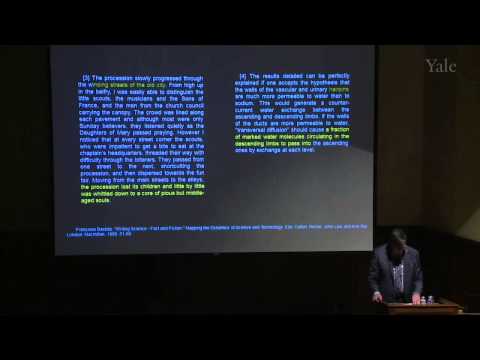
Yale Tanner Lecture 26th March 2014
It is under the notion of “agency” that I have regrouped some of the insights I gained from my work in science studies: hence the title: “How better to register the agency of things”. Tonight, Agency-One will deal more with semiotics, that is, with the trajectories of meaning. Tomorrow night, Agency-Two will deal with a more difficult aspect, namely with ontology, or rather “ontonomy” (not autonomy), that is, with the crossing of what is and what should be, with the drawing of the rules of what is. In both lectures, I will try to speak as if it was possible to devise a common language for those who thought themselves to be in two different and mostly opposite camps until they have been submitted to the same attacks by a third party bent on closing down all centers of learning. It is thus an exercise in diplomacy: can we ally together so as to resist a new enemy?
Lecture given at the end of an AIME workshop in Copenhagen on the invitation of the Danish Royal Academy of Science. The text can be read here.
I will take capitalism to mean not a thing in the world, but a certain way of being affected when trying to think through this strange mixture of miseries and luxuries we encounter when trying to come to terms with the dizzying interplays of “goods” and “bads”. Capitalism is a concept invented to help absorb this odd mixture of enthusiasm for the cornucopia of riches that has lifted billions of people out of abject poverty and the indignation, rage and fury in response to the miseries visited on billions of other people. Especially troubling to me is the feeling of helplessness that is associated with any discussion of economics and that I have so much trouble reconciling with what I consider science’s and politics’ main effects, these being the opening of new possibilities and the provision of margins to maneuver.
